
One of the most effective ways to enhance outdoor areas in Buffalo, NY, without completely demolishing them, is to cover the existing concrete with pavers.
Severe winters, freeze-thaw cycles, and old slabs can leave homeowners with cracked patios, even when the base is solid. Knowing how to install pavers properly will help you transform a faded surface into a strong, beautiful patio that withstands local weather conditions. With proper preparation and technique, this method produces professional-looking results and extends the lifespan of your outdoor area.
Why Concrete Patio Paver Installation Makes Sense in Buffalo
The weather in Buffalo is a significant factor in the patio’s performance. Snow, moisture penetration, and temperature changes will readily dislodge surfaces that are poorly installed. Covering concrete with pavers offers advantages: the firm foundation provides some flexibility, which helps manage minor movement. Knowledge of concrete patio construction minimizes the risk of movement, drainage issues, and early failure. This is particularly useful on structurally sound patios, but has become aesthetically outdated.
Evaluating the Existing Concrete Surface
The condition of the concrete must be carefully evaluated before any installation is performed. Huge structural cracks, subsidence areas, or excessive spalling should be addressed initially. A sloping concrete moving away from the house is not suitable for concrete patio paver installation.
Patio surface preparation is essential; without bonding and leveling, the concrete won’t be clean and stable. Pressure washing is used to remove debris, and patching compounds are used to fill imperfections that may later affect pavement alignment.
Preparing the Surface for Long-Term Performance
Surface preparation directly affects the lifespan of your pavers. The preparation of patio surfaces involves verifying the slope for water runoff, eliminating minor cracks, and ensuring the slab is completely dry.
Buffalo’s climate requires moisture control. This step of how to install pavers is very crucial in deciding whether the patio will endure or not with the freezing and thawing cycles. A bonding agent or drainage mat can be applied to enhance adhesion and prevent moisture from trapping under the pavers.
Choosing the Right Materials and Layout
The choice of paver is as important as the installation technique. In outdoor hardscaping, the thicker type is used as a more durable option for seasonal stresses. Color and texture must be used to complement the architecture surrounding and conceal dirt and salt deposits that remain from winter.
Paver layout planning helps ensure paver leveling and spacing for uniform joints and a well-balanced look. Careful planning has integrated patio construction into the overall landscape, making it a practical extension of the house.
Applying the Base Layer and Adhesive
After the surface has been prepared, a thin layer of mortar or polymer-modified adhesive is applied. This is where most DIY projects fail. Incorrect application can cause unevenness, leading to hollow areas and loose pavers.
Knowing how to install pavers professionally means working in small portions, maintaining the adhesive in a workable state, and ensuring the placement is checked at every step. This cautious method also helps Buffalo homeowners prevent water infiltration under pavers.
Setting the Pavers with Precision
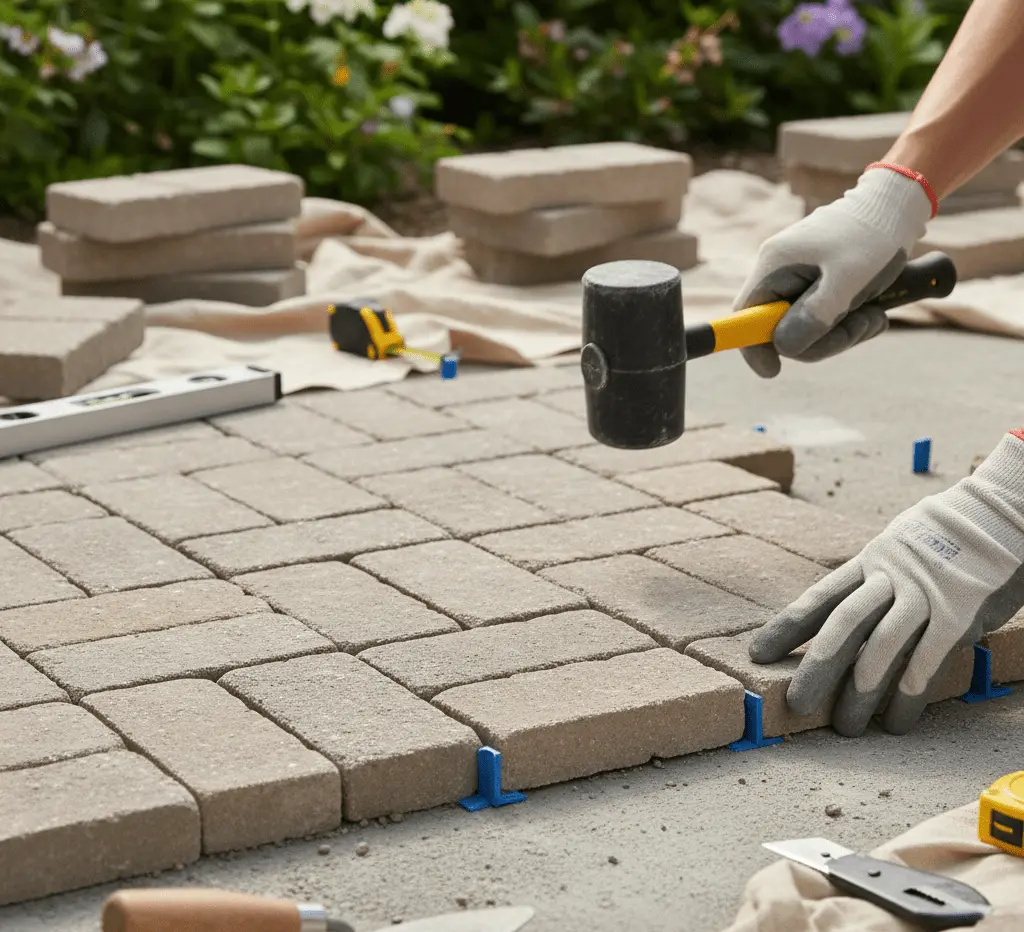
Pavers are to be pressed into the adhesive in accordance with the planned pattern. Tapping gently to make sure that the entire contact is formed, but not to crack the paver. This stage of paver installation requires patience and attention to detail.
Regular spacing between joints is important for long-term sustainability and aesthetics. It can be done either with a detailed paver patio installation guide or through experience, but precision in this matter determines the outcome.
Cutting, Edging, and Finishing Touches
Edge cuts enable the patio to be comfortably fitted within the existing boundaries. Proper cutting tools will leave clean, unchipped edges. Edging restraints can be installed to improve stability, particularly in high-traffic areas.
These are the steps that a person must follow when attempting DIY paver installation. Hasty completion is usually associated with visible imperfections. Close finishing makes the work other than average and professional.
Joint Filling, Sealing, and Final Curing
Once in place, polymeric sand is poured into the joints to cement the pavers. This prevents weed growth and improves water resistance. Paver sealing and finishing also provide added protection, particularly in Buffalo, where snowfall is common. One of the most important aspects of installing pavers is waiting long enough before installation. Failure to take this step will endanger months of hard work.
Maintenance Considerations for Buffalo Homeowners
Any paver patio can extend its life when properly maintained. The installation can be maintained by regularly cleaning, sealing as needed, and checking drainage flow. Basic patio care guidelines, such as avoiding harsh deicing chemicals, can help protect pavers and concrete. This solution is long-lasting when properly installed and will withstand local weather conditions. Cracks and potholes can be repaired by a professional paver installation service to ensure long-term durability.
DIY vs Professional Installation
Although DIY installation of pavers is considered by many house owners, the experience of the professionals can be felt. Skilled installers understand the behavior of local soils and weather, as well as material performance. Professional customers seeking paver installation services typically value warranties and long-term durability. The local knowledge that companies such as Concrete Buffalo bring prevents common mistakes during patio upgrades in Western New York.
For more insights, visit: American Concrete Pavement Association (ACPA)
When to Consider Expert Help
Complicated designs, drainage issues, or severely damaged concrete may require professional input. These challenges can be overcome through residential hardscape services. In these situations, constructing with Concrete in Buffalo would ensure compliance with the conditions and that buildings are built to local standards. Expert knowledge can save time and prevent costly future repairs.
Conclusion
Learning to lay pavers on concrete as a professional does is not just about paving a slab with stones. It requires consideration, attention to detail, and planning facilities to accommodate Buffalo’s harsh weather.
Regardless of whether you adhere to an instructional manual on a step-by-step guide to installing pavers on concrete, or you are using specialists, the main point is that you have to respect every step of the process. Knowing how to install pavers allows you to implement an effective strategy that transforms old concrete into a functional, beautiful outdoor environment, benefiting your home in the long term.
Contact Concrete in Buffalo
If you want long-lasting results without guesswork, consider working with Concrete Buffalo, NY, for expert guidance and reliable installation tailored to local conditions.
FAQs
Is this method suitable for Buffalo winters?
When done correctly, pavers over concrete handle freeze-thaw cycles better than many traditional surfaces.
How long does installation usually take?
Most residential projects can be completed within a few days, depending on size and preparation needs.
Is it possible to lay pavers on broken concrete?
Yes, even minor cracks can be repaired, and major structural damage should be discussed before installation.