Modernizing an old concrete patio or walk does not necessarily require full demolition. Homeowners are opting for thin pavers over concrete because they are practical and aesthetically appealing.
This way, you can transform cracked or old concrete into modern concrete and save time, labor, and material costs. It is necessary to understand how the system operates, where it can be used effectively, and the factors that affect performance before beginning the project.
Paving with thin ones is particularly useful where freeze-thaw cycles may accelerate surface wear, such as in New York. This overlay system is superior because it enhances durability and provides aesthetics that plain concrete lacks.
Understanding Laying Thin Pavers Over Concrete Patios
Thin pavers are specially engineered masonry units intended for placement on existing hard surfaces. They are also slimmer and lighter than traditional pavers and can therefore be used for overlays.
Can you put pavers over concrete when the homeowner enquires about it? The question depends on the condition of the surface, drainage, and structural stability. Thin pavers have been developed to address these shortcomings.
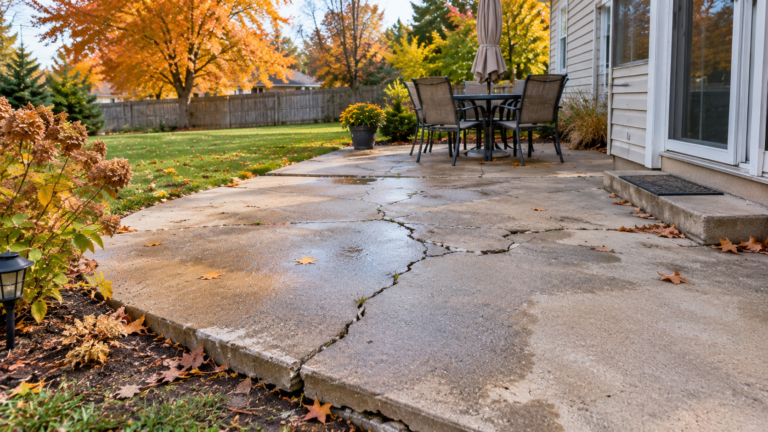
Even with potential surface cracking on concrete patios and walkways, they remain structurally sound. Thin pavers are installed on a wearing surface to prevent further wear, rather than removing the slab. This style is typically used for residential walkways, entry paths, and outdoor living spaces across New York.
Evaluating the Existing Concrete Surface
The slab should be examined before installing thin pavers over concrete. The concrete must be sound, flat, and free of significant structural movement. Minor cracks should be tolerated; however, slabs that have shifted or sunken should be repaired. Poor slope in cold climates in NY can cause water pooling and ice damage; therefore, drainage evaluation is important.
A firm foundation leads to success in the long run. An overlay cannot be recommended if the concrete exhibits high frost heave or significant settlement. The question “can you put pavers on top of concrete?” is a common concern for homeowners. It can be addressed through proper inspection, which saves them from costly repairs.
Installation Methods and Technical Considerations
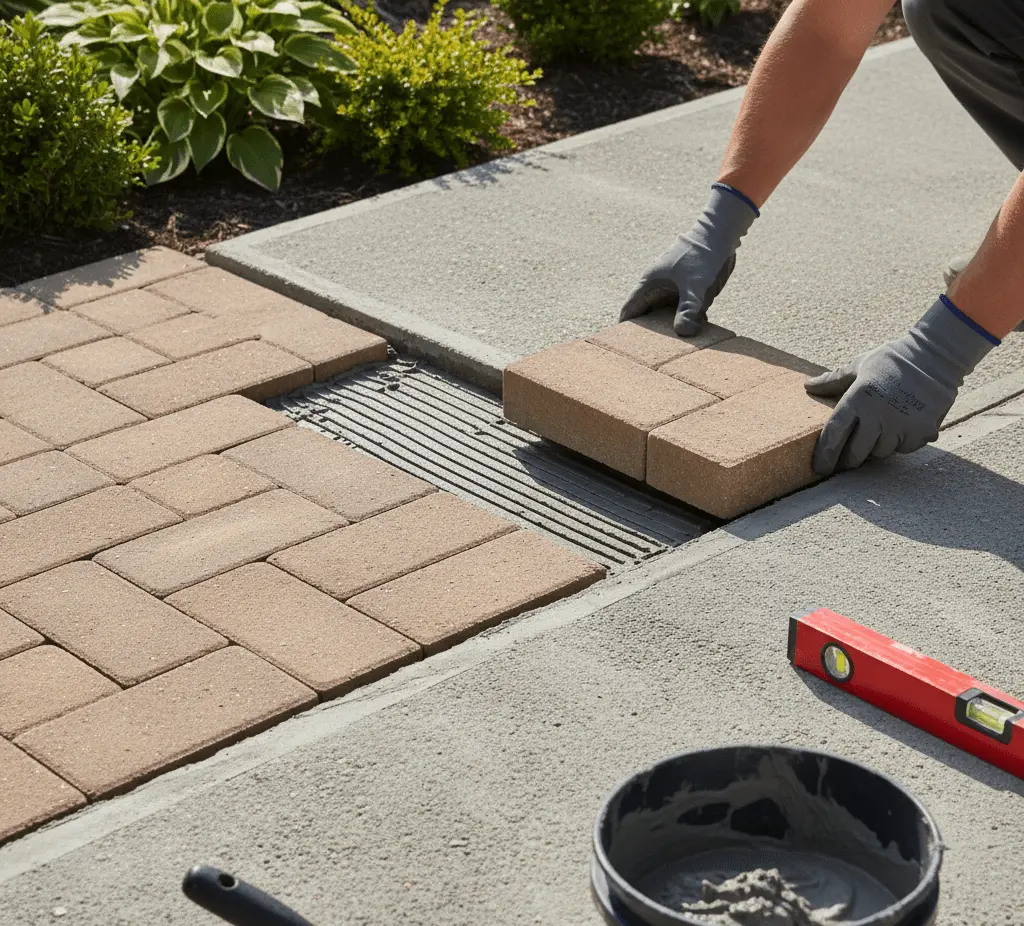
Installing pavers over concrete usually requires a bonding agent or a mortar-based product. Adhesion is used to keep the thin pavers in place while allowing for small movement due to temperature fluctuations. Polymeric sand or grout is placed in joints to prevent moisture infiltration and weed growth.
For patios, laying pavers over concrete surfaces must be done with great care, including proper leveling, to prevent trip hazards. Access points and pavements should also comply with local building regulations, particularly in New York municipalities, where access and drainage are enforced.
Other homeowners consider overlay pavers an option to maintain the existing high points near the doorstep. Thin pavers have minimal height, so clearance is not an issue compared to thicker materials.
Design Flexibility and Visual Integration
A significant advantage of thin pavers is that they can be designed in a variety of ways. They can imitate natural stone, brick, or modern concrete textures. It is useful to add pavers and a concrete patio together in projects that incorporate both old and new spaces in order to ensure smooth surfaces.
In mixed hardscape properties, pavers installed next to concrete can be used to mark boundaries or emphasize paths. Designers are also incorporating stone over concrete pad installations to create a more relaxed visual line and add personality to the exterior. Thin pavers would complement the historic and modern structures in Buffalo-area homes, where brick is the primary building material without crowding out the house.
Durability and Climate Performance in New York
One of the problems with an exterior in NY is freeze-thaw resistance. The thin pavers are designed to resist temperature changes when properly installed. Good drainage and covered joints reduce moisture infiltration, preventing winter cracking.
A question we often get is: Can you pave over concrete and still achieve long-term results? Yes, thin pavers perform well even in adverse weather when installation instructions are followed. This suits them in walkways or patios, which are likely to be covered by snow-clearing machines.
Read more with Angi: Advantages of Concrete Over Other Materials.
Maintenance and Long-Term Care
Thin paver systems are also less costly to maintain than exposed concrete. Cleaning and replacing joint sand on an occasional basis helps keep the appearance. In the event of any breakage, it is possible to replace individual units without affecting the overall surface.
Putting pavers over concrete makes it easy to repair and modify, unlike traditional resurfacing, which requires excavation to alter the design. This explains why pavers are highly flexible and drain well. Thin pavers remain the solution of choice for flexibility.
Practical Applications for Patios and Walkways
Pavers over a concrete patio are much better because they allow homeowners to upgrade the landscape without destroying the entire area. The walkways become more slip-resistant and attractive, increasing curb appeal and safety.
In other instances, laying concrete pavers on concrete helps strengthen old slabs and update the look. This method is prevalent in the entryways and side yards of neighborhoods in Buffalo. When you are laying pavers on concrete, it is important to understand local soil conditions, drainage patterns, and seasonal weather as much as it is to select materials.
Professional Installation and Local Expertise
Although thin pavers over concrete are sometimes installed by individuals, a professional evaluation makes sure that there is good bonding, correction of slope, and adherence to code. Local contractors are familiar with the challenges of the NY climate and material performance.
Professionals, such as Concrete in Buffalo, can make your overlay pavers last for years without failure. Concrete in Buffalo has left a mark on many local owners in the area as the trusted choice of contracted work on any project that needs technical accuracy and familiarity with local surroundings.
Get more insights: How to Install Pavers on Concrete – Expert Tips.
Conclusion
Covering concrete with thin pavers is a clever and cost-effective way to upgrade patios and walkways without tearing out the slabs. When the concrete base is stable and installation follows best practices, this technique delivers durability, aesthetic appeal, and long-term value.
For New York homeowners struggling with aging concrete areas, thin pavers are a multifunctional solution that offers flexibility in performance and design. Collaborating with experienced professionals like Concrete in Buffalo will ensure that thin pavers over concrete withstand local weather conditions.
Contact Concrete in Buffalo
Upgrade with Thin Pavers Over Concrete: Complete Guide for Patios and Walkways: Learn installation methods and benefits. Contact Concrete in Buffalo for your upgrade!
FAQs
Is installing pavers over cracked concrete possible?
Yes, minor cracks are acceptable, provided the slab is sound and prepared.
Can thin pavers be used on the walkways during the snowy season?
Their installation is appropriate, and they work well in NY winters and provide good traction.
Do skinny pavers make patios much taller?
No, their low profile has reduced height variations and clearance problems.