If you own a home or a commercial building in Western New York, you probably already noticed that concrete don’t stay looking perfect forever. Driveways, sidewalks, patios, garage floors, walkways, they all wear down eventually. But here’s the thing, property owners in Buffalo usually see this happen way sooner than folks living in other parts of the country do.
Why though? Honestly it’s simple. Buffalo’s climate just creates some of the toughest conditions out there for concrete. Snow, ice, freezing temps, road salt, and constant back-and-forth temperature swings, all of it teams up to weaken even concrete that was installed the right way.
Knowing why this happens can help homeowners actually do something before those tiny cracks turn into repair bills that hurt. Whether you’re trying to keep up a driveway or planning a brand new concrete job, learning about Buffalo’s weird weather is honestly step one to protecting your money.
In this guide we’ll get into why concrete damage Buffalo NY is such a common headache, what’s actually causing it, the warning signs you shouldn’t ignore, and what you can actually do about it.
Why Buffalo’s Climate Is So Rough on Concrete
Buffalo gets long winters, tons of snow, freezing cold, and weather that just won’t make up its mind. Unlike places that stay steady cold the whole season, Buffalo bounces above and below freezing over and over during winter.
These constant flip-flops are what really beats up concrete.
Concrete looks solid on the outside but it’s actually got thousands of tiny pores in it (kinda like a sponge, if you think about it). Water gets into these pores every time it rains or snow melts. Then once the temp drops below freezing, that trapped water turns to ice.
And ice takes up more room than water does.
That expansion pushes pressure inside the concrete. Over time that pressure makes tiny cracks, and those cracks slowly get bigger and bigger.
This happens dozens of times every single winter, and that’s basically what leads to freeze thaw concrete damage.
Understanding the Freeze and Thaw Cycle
What Is Freeze Thaw Damage?
One of the main reasons behind freeze thaw concrete damage is just repeated freezing and melting, over and over.
Here’s how the cycle goes:
| Stage | What Happens |
| Rain or snow | Water soaks into concrete pores |
| Temperature drops | Water freezes and expands |
| Concrete stretches | Internal pressure develops |
| Temperature rises | Ice melts and leaves tiny gaps |
| Cycle repeats | Cracks grow larger over time |
Each cycle weakens the concrete just a little bit. One freeze probably won’t do much damage on its own. But fifty or a hundred cycles in one Buffalo winter? That can seriously mess with the strength of the concrete.
Why Buffalo Gets More Freeze Thaw Cycles Than Most Cities
Some northern cities just stay below freezing for weeks straight, no drama. Buffalo’s weather changes dramatically though, like almost daily sometimes.
For example:
- Snow falls at night
- Temps go above freezing the next afternoon
- Rain comes, then another freeze hits
- Snow melts in the sunny afternoon
- Ice forms again overnight
Every one of these swings adds more stress onto the concrete. That’s basically why concrete damage Buffalo NY is so much more common here than in cities with milder weather.
Water Is Concrete’s Biggest Enemy (Not Just the Cold)
A lot of homeowners think it’s just the freezing temps doing the damage. Nah, the real problem is moisture.
Concrete’s constantly soaking up water from stuff like:
- Rain
- Snow
- Ice
- Melting snowbanks
- Roof runoff
- Poor drainage
- Sprinklers
- Standing puddles
When that water freezes it expands, obviously. And that repeated expanding slowly wrecks the concrete from the inside out. Even a little trapped moisture can turn into a big nasty crack after a few winters go by.
How Buffalo Winters Cause Concrete Cracking
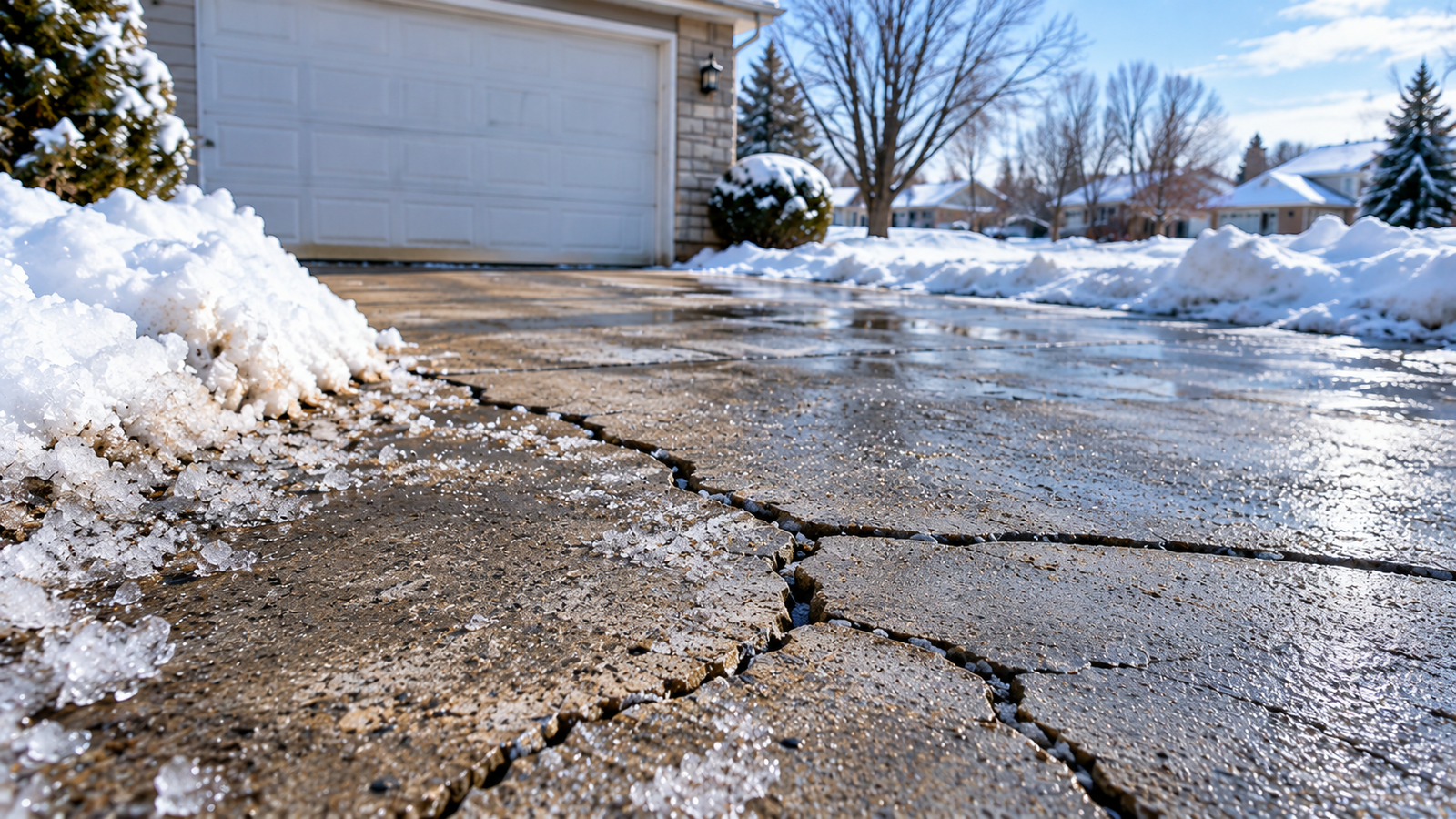
One of the first things homeowners notice is cracking, plain and simple. Concrete cracking Buffalo winters is super common because every single winter adds more stress to the mix.
Small hairline cracks might look harmless at first. But unfortunately they let even more water sneak in.
That creates a cycle like this:
- Small crack shows up.
- Water gets in.
- Water freezes.
- Crack gets bigger.
- More water gets in.
- Damage speeds up.
Ignoring those early little cracks pretty much always ends up costing you more later. Ask anyone who’s had to redo a whole driveway, it’s not cheap.
Common Types of Concrete Cracks
Not every crack’s the same, some are just annoying to look at, others mean real trouble underneath.
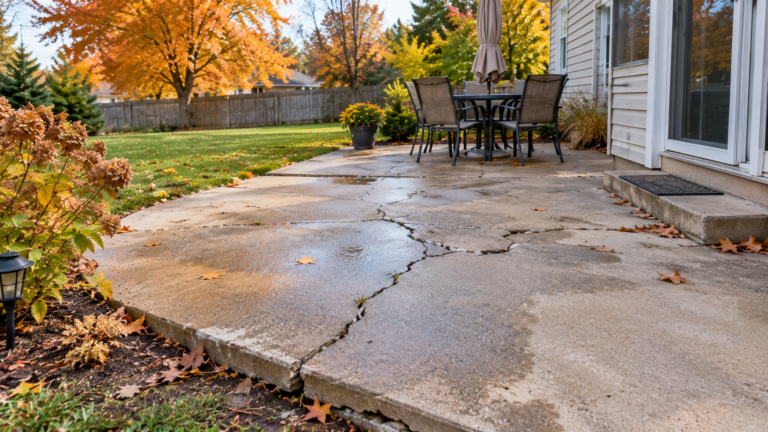
Hairline Cracks. Real thin cracks, usually from normal shrinkage or early freeze damage. Still worth keeping an eye on since water can get in through em.
Surface Cracks. These show up across the top layer. Usually pop up after a couple winters have gone by. Surface cracks tend to keep growing if nobody deals with them.
Deep Structural Cracks. Big cracks that split sections of the concrete apart, this could mean serious movement happening below the slab. These usually need an actual professional to fix.
Snow Removal Can Actually Make Concrete Damage Worse
Buffalo gets a ton of snow every year, no surprise there. Clearing it is necessary of course, but doing it wrong can hurt your concrete.
Mistakes people make a lot:
- Using metal shovels way too aggressively
- Smacking the surface with the snow blower
- Chipping at ice with sharp tools
- Leaving packed snow sitting there for weeks
All that physical banging around creates tiny openings where moisture can sneak in even easier.
The Hidden Damage Road Salt Causes
Tons of homeowners lean on deicing salt all winter long. It does help with safety, sure, but it can shorten how long your concrete lasts.
Salt doesn’t destroy good concrete directly. What it does instead is create conditions that make the freeze and thaw damage way worse.
Salt basically:
- Keeps the concrete wetter for longer
- Lets freezing happen over and over
- Increases how much moisture gets in
- Speeds up surface wear and tear
Over a few winters this all adds up to concrete spalling Buffalo homeowners deal with pretty often.
What Is Concrete Spalling Anyway?
Spalling’s when that top surface layer starts breaking apart. Instead of nice smooth concrete you start noticing:
- Flaking
- Peeling
- Chipping
- Rough patches
- Exposed aggregate (basically the little rocks inside showing through)
- Small pits
This whole thing is called concrete spalling Buffalo, and once it starts, the concrete gets way more open to moisture getting in. Without fixing it, things go downhill fast.
Signs Your Concrete Might Be Starting to Spall
Keep an eye out for stuff like:
- Small flakes coming loose
- Rough, weird texture
- White mineral spots showing up
- Surface scaling
- Tiny holes here and there
- Stones poking through
- Uneven coloring
Catching these early can save you from having to replace the whole slab, which trust me costs way more.
Why Driveways Get Hit the Hardest
Driveways honestly take more abuse than pretty much any other concrete surface you got. During winter they deal with:
- Vehicle weight
- Snowplows scraping by
- Tire pressure
- Road salt
- Ice building up
- Constant moisture
Because of all that, driveways usually show damage way before patios or sidewalks do. A lot of homeowners first spot winter concrete issues Buffalo near the edges of their driveway, right where melting snow tends to pool up.
Sidewalks Deal With Similar Problems
Sidewalks go through:
- Foot traffic
- Snow shoveling
- Ice melt chemicals
- Standing water
- Tree roots pushing up underneath
When freeze thaw cycles combine with all that heavy use, cracking becomes really common, really fast. Keeping sidewalks sealed up and drained properly helps stretch out their lifespan quite a bit.
Poor Drainage Speeds Up Concrete Failure
Water’s the biggest threat to concrete, especially when it’s got nowhere to go. Poor drainage is honestly one of the top causes of winter concrete issues Buffalo because standing water just keeps freezing and thawing all winter long.
Common drainage problems include:
- Downspouts dumping right onto the concrete
- Low spots where water just sits
- Bad grading around the house
- Clogged drainage systems
- Melting snow pooling near driveways or patios
When water just sits there on the surface, it’s got more time to soak into the concrete. Once temps drop below freezing, that trapped moisture expands and causes even more cracking.
Fixing your drainage is honestly one of the easiest ways to cut down on concrete damage Buffalo NY before it turns into a way bigger, way more expensive problem.
Older Concrete Faces Bigger Risks
Concrete just naturally ages, that’s life. Even when it got installed the right way to begin with, years of dealing with Buffalo’s rough climate slowly chips away at its strength.
As concrete gets older it gets more open to:
- Surface wear
- Moisture absorption
- Freeze and thaw cycles
- Heavy traffic
- Salt exposure
Small cracks that used to be no big deal can turn into real structural problems pretty fast. Older driveways and sidewalks oughta get checked regularly so repairs happen before the damage gets bad.
Installation Quality Actually Matters A Lot
Not all concrete’s built the same, not even close.
A slab installed properly can last decades. Bad installation though? Might start showing damage in just a couple years, which honestly stinks if you just paid for it.
A few things affect how long it lasts:
Proper Concrete. Mix Concrete made for cold climates usually holds up better through Buffalo winters. The right mix cuts down on water absorption and helps resist freezing temps.
Adequate Thickness. Concrete that’s too thin can crack under the weight of cars or from all those freeze thaw cycles. Driveways generally need thicker concrete than a sidewalk or patio would.
Reinforcement. Steel reinforcement or fiber additives help boost strength and cut down cracking. It can’t stop every single crack, no reinforcement’s magic, but it does limit movement and adds durability.
Proper Curing. Fresh concrete needs time to cure the right way. If you rush the curing, the surface ends up weaker and more likely to get moisture damage down the road.
Final Thoughts
Buffalo’s weather makes one of the toughest environments for concrete anywhere in the whole country, not exaggerating. Heavy snow, constant temp swings, road salt, and nonstop moisture team up to wreck concrete way faster than in most other cities.
Good news is, homeowners aren’t stuck just watching it happen. Understanding how freeze thaw concrete damage, concrete cracking Buffalo winters, and concrete spalling Buffalo actually work makes it a lot easier to protect what you’ve invested. Regular inspections, good drainage, routine sealing, and fixing small cracks before they grow can really stretch the life of your driveway, sidewalk, patio, or garage floor.
If you’re seeing signs of concrete damage Buffalo NY, acting sooner instead of later is honestly the smart move. Small repairs now can save you from major reconstruction costs later, and keep your property looking good, safe, and solid through Buffalo’s rough winters.
Frequently Asked Questions
1. Why does concrete crack in Buffalo winters?
The main reason why does concrete crack in Buffalo winters comes down to the repeated freeze and thaw cycle. Water gets into tiny pores in the concrete, freezes, expands, and creates pressure that slowly forms cracks. Snow, ice, and road salt just make it all worse over time.
2. How to protect concrete from snow damage?
If you’re wondering how to protect concrete from snow damage, start by sealing it regularly, clearing snow fast, improving drainage, fixing small cracks early, and going easy on the deicing salt. These steps help cut down moisture getting in and lower freeze thaw damage.
3. When should I hire a concrete repair contractor in Buffalo?
You should call a concrete repair contractor Buffalo if you notice cracks getting wider, uneven surfaces, spalling, or spots where concrete’s breaking apart. Getting repairs early is usually cheaper than replacing the whole slab.
4. What causes winter concrete issues in Buffalo?
Common winter concrete issues Buffalo come from freeze and thaw cycles, trapped moisture, heavy snowfall, road salt, poor drainage, and constant exposure to freezing temps. Together all this slowly weakens concrete and shortens how long it lasts.
5. Can salt damaged concrete be repaired?
Yep. Salt damaged concrete can usually be fixed if you catch the deterioration early enough. Minor surface damage might just need resurfacing or patching, while bad spalling or deep structural cracks might need partial or full replacement. Regular upkeep and concrete sealing Buffalo NY can help stop future salt damage before it starts.
Protect Your Concrete Before Buffalo’s Next Winter
Buffalo’s weather can be brutal on concrete, but staying on top of maintenance and getting professional repairs can stop small problems from turning into expensive replacements. If you’ve spotted cracks, spalling, or other signs of concrete damage Buffalo NY, the team over at Concrete In Buffalo can check out your driveway, patio, sidewalk, or garage floor and figure out the right fix. Visit https://concreteinbuffalo.com/ or call (716) 396-6033 today to book a consultation and keep your concrete protected all through Buffalo’s next winter.