A concrete patio is honestly one of the best parts of a backyard. You get a solid spot to chill, throw a BBQ, hang with friends, whatever. But here’s the thing, concrete doesn’t last forever, no matter how tough it looks. Years of rain, snow, freezing cold, the ground shifting under it, and just normal everyday use can wear it down slow, bit by bit.
If you’re one of the homeowners googling concrete patio buffalo ny services, you really gotta check your patio’s condition before winter hits. Buffalo winters are no joke on concrete that’s already damaged. A tiny crack today? Could turn into a big ugly one by spring. Uneven spots get worse too, and water sneaks into any little opening before it freezes and expands (which is basically the worst thing that can happen to concrete).
Sometimes a little patio repair fixes it right up. Other times resurfacing does the trick and makes it look new again while stretching its life a bit longer. But sometimes, repairs are just a band-aid, and replacing the whole thing is honestly the smarter move in the long run.
Here’s seven signs your patio might be done for before winter comes.
1. Large or Deep Cracks Are Spreading Across the Patio
Small hairline cracks? Totally normal, don’t panic. Concrete does this naturally as it ages and settles into the ground. A couple little surface cracks here and there doesn’t mean you need a whole new patio.
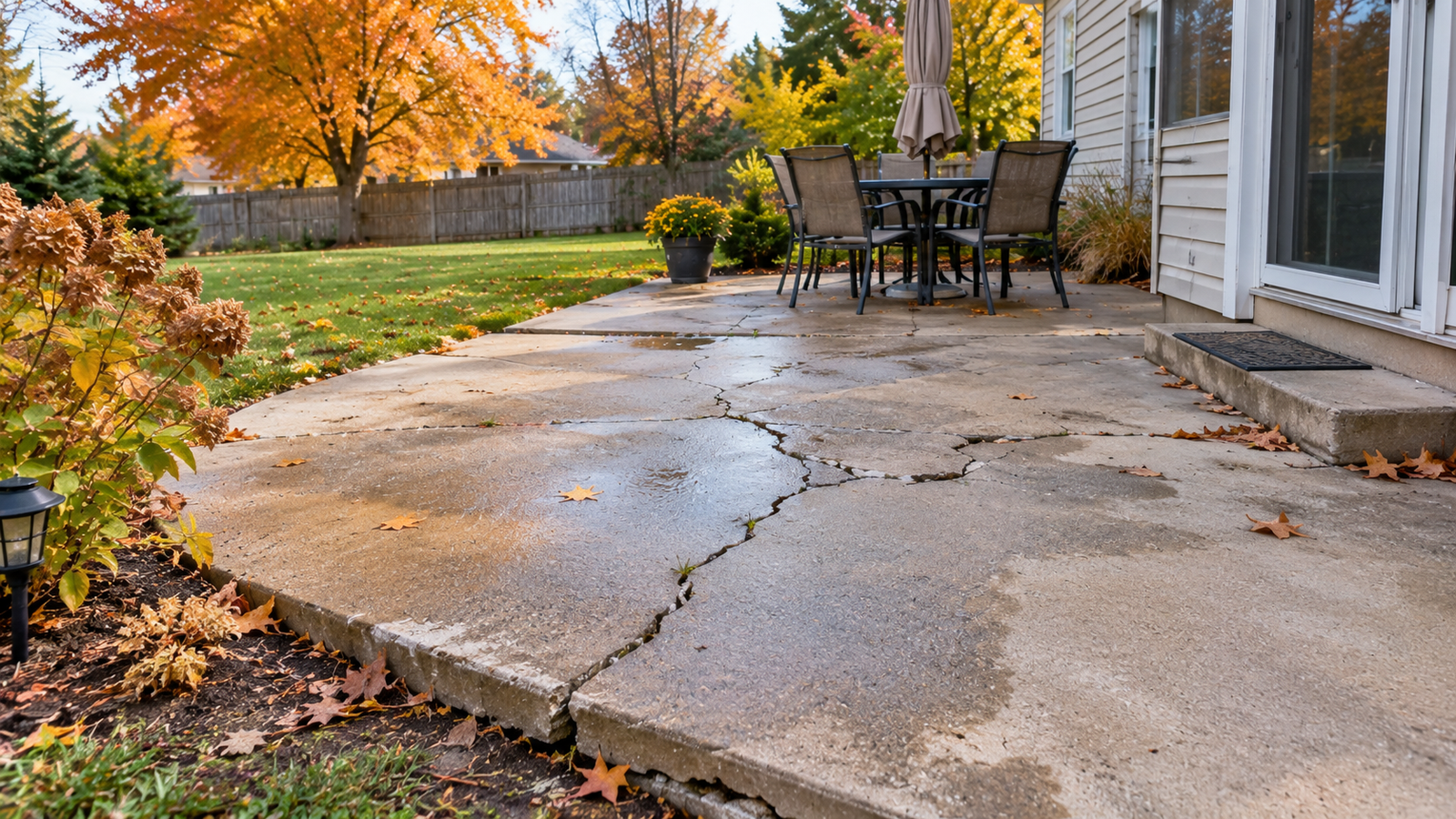
But things get serious when the cracks are wide, deep, or spreading across a big chunk of the patio. Sometimes you’ll notice several cracks kind of linking up with each other, like a spiderweb almost, making broken sections all over.
Big cracks let water sneak underneath the concrete. Once winter rolls in, that water freezes and expands (science, basically), and the freeze-thaw cycle forces those cracks even wider, causing more damage than before.
A homeowner might just go for cracked patio repair if the damage is small and contained. But widespread cracking usually means something deeper’s going on, maybe with the slab itself or the base underneath.
Some common reasons cracking gets bad:
- Poor soil prep before it was installed
- Ground movement (the earth shifts more than people think)
- Bad drainage
- Heavy stuff sitting on it too long
- Tree roots growing underneath, pushing up
- Repeated freezing and thawing over and over
- Just an old, aging slab
If cracks keep popping up even after you’ve already fixed them once or twice, replacing might honestly save you money and headache instead of patching the same spot forever.
2. Your Patio Has Become Uneven or Sunken
A patio’s supposed to be flat and stable, right? So if one side starts sinking down, that’s a bigger problem than it looks.
Sunken concrete usually happens cause the soil underneath shifted or settled over time. Water can also wash away parts of the base little by little. So basically the concrete loses its support system underneath.
Some stuff to watch for:
- One part of the patio sits lower than the rest
- Slopes in a weird direction it shouldn’t
- Water just sits and collects in spots
- Furniture wobbles or rocks when you put it down
- Edges pulling away from steps or walls nearby
- Feels uneven when you’re literally just walking on it
An uneven patio isn’t just annoying, it’s kind of a safety issue too, someone could trip. Plus it might push water toward your house’s foundation instead of away, which is bad news.
Minor sinking might get fixed without tearing the whole thing up. But when there’s serious movement, patio repair gets really tricky. Just filling in cracks won’t fix a slab that’s still actively sinking.
For a lot of folks searching concrete patio buffalo ny fixes, fixing the actual root problem matters just as much as pouring new concrete. Cause if you install a new patio on the same bad soil, guess what, same issues come back eventually.
3. Pieces of Concrete Are Breaking, Flaking, or Crumbling
Concrete’s supposed to have a tough, solid top layer. So if it’s peeling, flaking apart, or chunks are breaking off, that’s a red flag for surface damage.
This is called spalling (fancy word, I know). It happens when moisture gets into the concrete and freeze-thaw cycles chew away at the surface over time. Deicing salt, bad installation work, or just plain old age can make it worse too.
At the start it might just look ugly, like a cosmetic issue. But over time, more of the surface breaks apart. Small holes turn into bigger holes, and the whole patio starts looking rough and beat up.
A patio resurfacing contractor can sometimes fix this if the damage is only on the top layer and the slab underneath is still solid. Resurfacing basically gives it a fresh face without tearing out the whole patio.
But resurfacing isn’t always gonna cut it. If the concrete underneath is badly cracked or crumbling all through the slab, just covering it up might be hiding a way bigger problem.
Before picking between resurfacing or full replacement, it’s worth getting the whole patio checked out properly.
4. Water Pools on Your Patio After Rain
Standing water is one of those warning signs you really shouldn’t just ignore, especially with winter coming up fast.
A patio that’s installed right should slope enough for water to drain off on its own. If water keeps pooling in the same spots over and over, that could mean the concrete settled wrong, or the original install just didn’t have proper drainage to begin with.
In summer, puddles feel like no big deal, just annoying. But in a Buffalo winter? Total different story.
Water can:
- Get into existing cracks
- Freeze once temps drop
- Expand right inside the concrete
- Make cracks wider and weaken already-damaged spots
- Turn into slick, dangerous ice on the surface
If it’s just a minor drainage issue, patio repair might handle it fine. But if the whole patio settled wrong or slopes toward your house, replacement is probably the safer bet.
A brand new install lets you fix drainage properly and build in the right slope right from the start.
5. Previous Repairs Keep Failing
Repairs should hold up fine if the slab underneath is still in decent shape. But if you’ve patched the same cracks like three times already and they keep coming back? Yeah, something bigger’s probably going on below.
Repeating the same repair over and over gets old fast, and expensive too honestly.
Like say you fill a crack in summer, then winter hits and it’s cracked open again. Or you patch a broken spot, and a few months later the area right next to it starts crumbling instead.
Usually this happens cause the repair only fixes what you can see, not the actual cause underneath.
Could be:
- Soil that just keeps moving
- Bad drainage that never got fixed
- A weak base holding everything up
- Structural stuff breaking down
- Tons of freeze-thaw damage built up over years
At some point, doing more temporary patio repair work stops making sense money-wise. Full replacement costs more up front, sure, but it holds up way longer.
A patio resurfacing contractor can actually take a look and tell you if resurfacing’s still an option, or if the concrete’s too far gone for another surface fix.
6. The Patio Is Pulling Away From Your Home or Other Structures
Patios usually sit right next to the house, steps, walkways, stuff like that. Over time though, it can start pulling away from all that.
You might notice a gap growing between the patio and your house wall. Sometimes it separates from the steps or a walkway attached to it too.
This kind of separation usually happens from settling, the soil shifting, or just changes in the concrete as it ages.
That gap can let water sneak into spots where it really shouldn’t be collecting. And once winter hits, trapped water freezes and causes even more movement and damage.
If your patio’s pulling away from the house, definitely check the slope direction too while you’re at it. Water’s supposed to move away from the house, not toward it.
This is one of those situations where you shouldn’t just assume a quick patch fixes everything. A patio that’s damaged right next to your home might need a fuller fix, one that handles drainage, movement, and keeps things stable for the long haul.
7. Your Patio Is Old and No Longer Meets Your Needs
Sometimes it’s not even about damage you can see. An older patio might still look pretty solid on the surface, but honestly it might just not fit what your family needs anymore.
Maybe it’s too small for when you’re hosting people. Or maybe you just want something that looks nicer with a fresh new layout. Some folks are also thinking about adding a fire pit, an outdoor kitchen, a seating wall, whatever else they’ve been dreaming about for the yard.
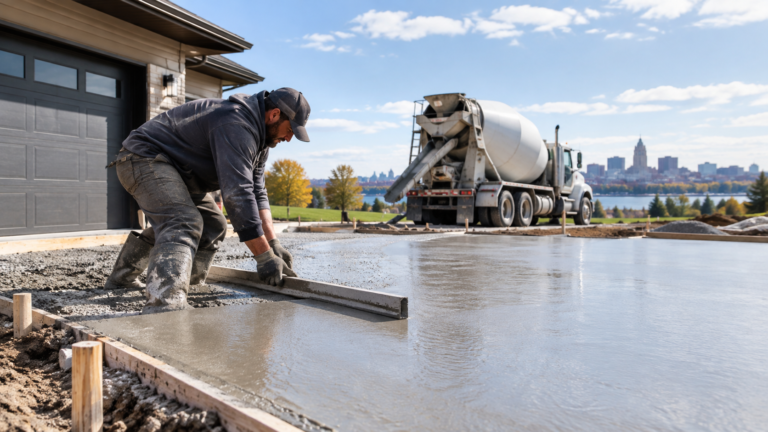
In cases like that, replacing gives you a shot to fix both how it looks and how it actually works for you.
Homeowners looking into decorative patio contractors might wanna check out finishes that feel more custom. Think textured surfaces, cool patterns, stuff that actually matches the house and the landscape instead of just being plain gray concrete.
A new patio also opens the door to stamped patio installation if you’re going for something more decorative-looking.
Replacing an old patio can come with a bunch of perks:
| Benefit | How It Can Improve Your Outdoor Space |
| Better drainage | Helps move water away from the home |
| Improved safety | Removes uneven and damaged areas |
| More usable space | Creates room for furniture and entertaining |
| Updated appearance | Gives the backyard a fresh look |
| Better durability | Replaces aging concrete with a properly prepared installation |
| Custom design | Allows for decorative finishes and layouts |
A concrete patio’s supposed to be a safe, enjoyable part of your home, not something you’re constantly worried about. Big cracks, sinking spots, crumbling concrete, water just sitting there, repairs that keep failing, gaps pulling away from the house, or just an old outdated design, all of these are signs it might be time to think about replacing it.
For homeowners out there researching concrete patio buffalo ny services, the right fix really depends on what shape the concrete’s actually in. Small stuff can usually be handled with patio repair. A surface that’s worn but still solid underneath might do great with help from a patio resurfacing contractor. And bigger structural problems? That usually means it’s time for a full replacement.
Taking care of it before winter helps stop the existing damage from getting worse than it already is. A patio that’s installed the right way can give you a safer, stronger, better-looking outdoor space for years down the road.
FAQ
1. When should I replace my patio?
If you’re sitting there wondering when should i replace my patio, replacement’s usually needed once the concrete’s got major cracks, serious sinking, crumbling spread all over, bad drainage, or repairs that just keep failing no matter what. Getting a pro to inspect it can help figure out if repair, resurfacing, or full replacement is the smarter move.
2. Can a cracked patio repair fix large cracks?
Cracked patio repair can help out with some kinds of damage, sure, but big or repeat cracks usually mean something deepness wrong. If the concrete keeps moving or the base underneath’s unstable, replacement’s probably gonna hold up way better in the long run.
3. What does a patio resurfacing contractor do?
A patio resurfacing contractor basically fixes up or improves the top layer of a patio that’s still structurally solid underneath. Resurfacing can make worn-out concrete look way better, but it’s not really the move if there’s serious structural damage going on.
4. Is patio resurfacing buffalo a better option than replacement?
Patio resurfacing buffalo can be a solid choice when the slab underneath’s stable and the main problems are just cosmetic or stuck on the surface. Replacement tends to make more sense when there’s serious cracking, settling, drainage issues, or damage that’s spread out everywhere.
5. Can decorative patio contractors install a new stamped concrete patio?
Yep, decorative patio contractors usually offer design options that make a replacement patio look a lot better. Stamped patio installation can give you that textured, decorative finish while letting you totally update the whole look of your outdoor space.