Winters in Buffalo, NY are rough, honestly. Heavy snow, freezing temps, and the freeze-thaw thing happening over and over all put concrete driveways through a lot. You gotta clear the snow so nobody slips, but the wrong tools or deicing products can mess up the surface over time. Think cracks, flaking, rough patches, basically stuff nobody wants in their driveway.
Doing snow removal from concrete driveway surfaces right is more than just shoving snow to the side. You need good equipment, ice control that actually fits, and some idea of how winter weather treats concrete. Doesn’t matter if you shovel it yourself or pay someone, a few simple precautions keep the surface in better shape all season.
So this guide shows how to get snow off without wrecking the concrete, especially during those brutal Western New York winters.
Understand Why Concrete Driveways Get Damaged in Winter
Concrete looks super solid, but its got tiny pores that let moisture slip in. That’s called concrete porosity, and it’s a big reason concrete reacts the way it does in cold weather.
Once water gets inside and freezes, it expands and pushes from within. Do that over and over and the surface slowly gets weaker, mostly if the concrete was already iffy from bad installation, poor curing, or old damage.
Road salt and some chemical deicers can raise the chance of the surface breaking down in certain situations. Scraping hard with metal tools also pops off little bits of weak concrete.
Knowing this stuff helps you pick safer ways to clear snow. Basically, you want it gone fast without stressing the driveway so much that it dies early.
Choose the Right Snow Removal Equipment
What you use matters a lot. Tools made for asphalt or rough pavement might not work for every concrete driveway, especially a newer one or one that’s already looking worn. Before you start, think about how deep the snow is, what shape the driveway’s in, and how much effort you’re up for.
Use a Plastic Snow Shovel
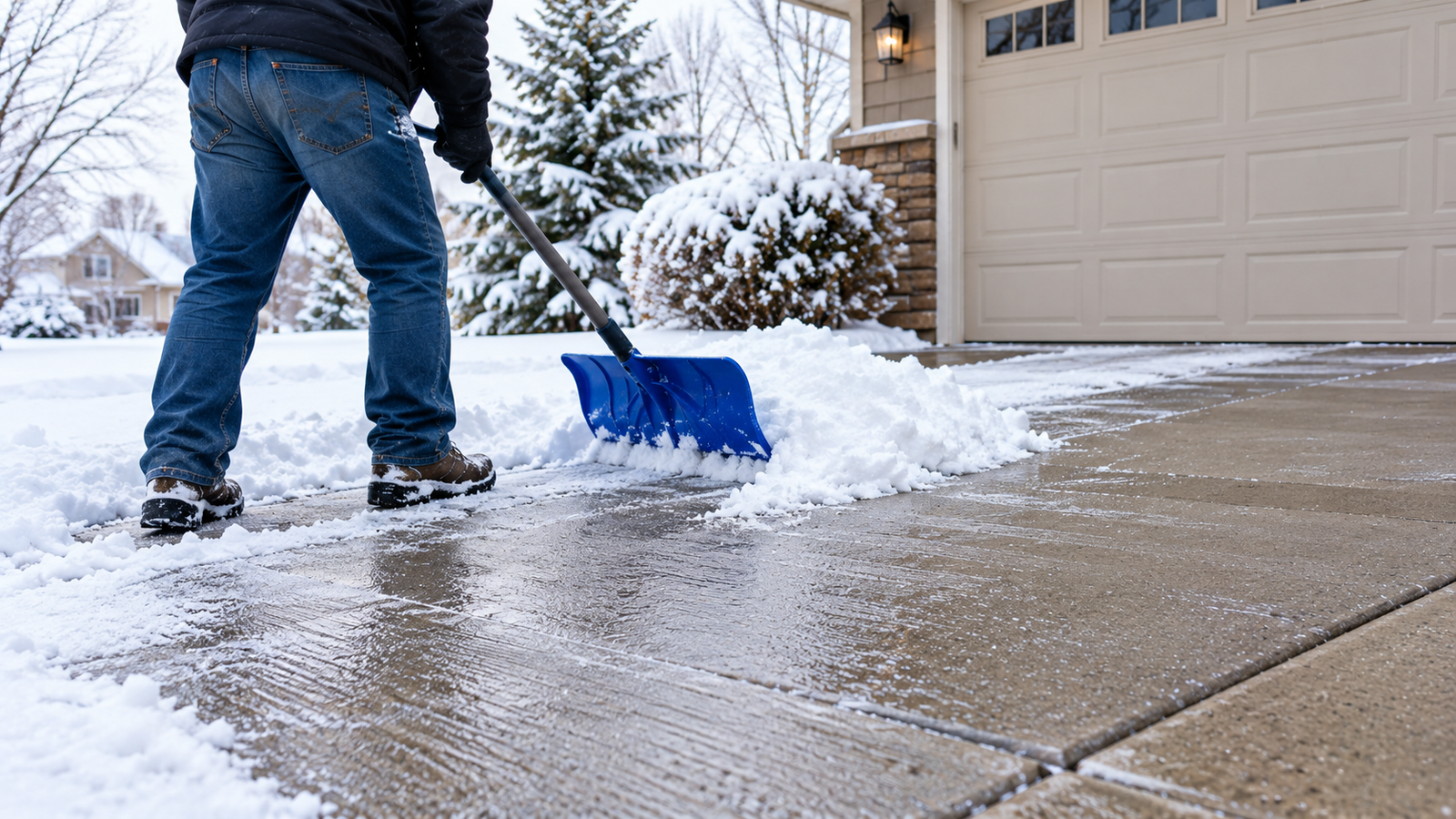
A plastic shovel with a smooth, sturdy blade works for most home driveways. Plastic is usually less likely than a sharp metal edge to scrape or chip things up during normal clearing.
Grab one with a comfy handle and a blade wide enough to move snow fast but not so big you cant control it. Don’t slam it down hard on packed snow, either.
Still, plastic shovels can do damage if you go wild with them, like near cracks or raised edges. Hold the blade at a slight angle and push the snow ahead of you instead of chopping down again and again.
Consider a Snow Blower
A snow blower helps a ton when Buffalo gets a few inches overnight or a storm just won’t quit. It saves your back and stops snow from getting packed down by feet or cars.
Pick one with adjustable skid shoes or some clearance setting, so the scraper isn’t grinding on the concrete. Check the manual when adjusting it.
If your driveway’s bumpy, look it over first and don’t run the machine like crazy over raised joints or busted spots.
Remove Snow Before It Becomes Compacted
Easiest way to protect a concrete driveway? Clear snow before it gets hard to move. Fresh snow is lighter and way easier than stuff that’s been squished by cars or melted and refrozen.
Snow piles up quick in Buffalo, especially in lake-effect storms. If you wait till its totally done, you might be stuck with a thick heavy layer, ugh.
When you can, clear it in chunks during a long snowfall. Push it to a spot you picked out, not against garage doors, walkways, or drains.
Watch tire tracks and spots people walk on a lot, since those get packed first.
Early clearing also means less ice when temps bounce around. It won’t stop every winter problem, like a random crack showing up in March, but regular clearing is a solid part of looking after your concrete.
Be Careful When Removing Ice From Concrete
Things get harder when it gets colder and leftover wetness turns into hard ice. Scraping hard seems like the fastest fix, but it can hurt concrete that winter already weakened.
Skip sharp metal tools for chipping ice. Picks, axes, and hard hits can break the surface, wreck edges, or make cracks bigger.
Try an ice scraper made for paved surfaces instead, using steady pressure and not hitting the concrete. If the ice is too thick, think about a proper deicing product and give it time, following the label.
Good drainage helps too, since water collecting near the garage, along the edges, or in low spots keeps freezing again and again.
Fixing those spots could make shoveling easier next time and cut down winter damage.
Select Deicing Products Carefully
Picking the right deicing products matters for keeping a concrete driveway okay through winter. They help with slippery stuff, sure, but not every kind fits every surface.
Regular road salt, usually sodium chloride, is everywhere because it melts ice when temps are right. But using it again and again might add to concrete wearing down, mostly if its new, badly cured, or already damaged.
Other products have different temperature ranges, application rules, and effects on concrete. Calcium chloride and magnesium chloride, for instance, aren’t automatically harmless swaps. It depends on the formula, how much you use, the concrete’s condition, and what the maker says.
Read the label first and make sure it’s okay for concrete.
Only use the recommended amount. More deicer doesn’t always work better and might just give the driveway extra chemical exposure all winter.
Address Salt, Freezing Temperatures, and Concrete Damage
Salt, moisture, and freezing temps together are really hard on concrete driveways. Salt lowers water’s freezing point, but it can also cause damage when used wrong or too much.
When snow melts, salty water seeps into the pores. If it gets cold again, that moisture freezes and builds pressure inside. Do it enough and the surface weakens, leading to cracks or flaking.
To lower the risk, don’t dump road salt all over. Get loose snow off first so any deicer has less to do.
After storms, check where salty slush collects. When it’s warm enough, rinsing off salt can limit how long it sits.
For Buffalo homeowners, careful shoveling plus smart salt use is a practical way to protect concrete through those long, cold winters.
Watch for Early Signs of Surface Scaling
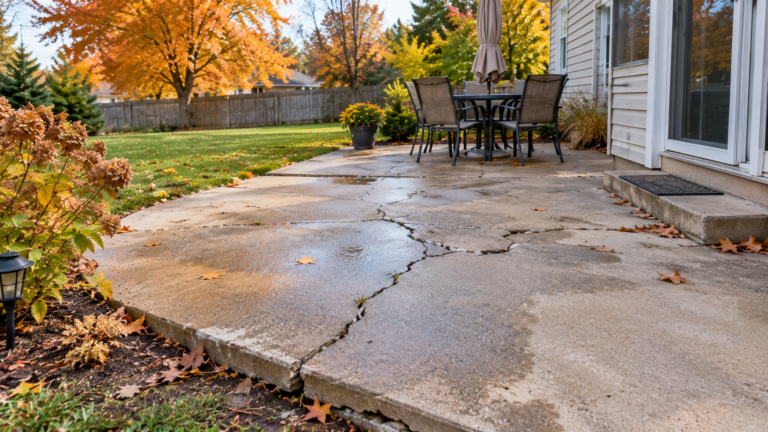
Surface scaling happens when the top layer of concrete starts to peel, flake, or just break off. Your driveway ends up looking rough and bumpy, with tiny bits of the surface coming loose from the stuff underneath.
A bunch of things can cause scaling, like bad curing, repeated freeze-thaw cycles, too much moisture, and deicers that are wrong for the job or used way too much. Cheap concrete or a sloppy finish can make it worse too.
Check your driveway every now and then, mostly after a long cold spell or when the snow starts melting in late winter.
Look for shallow flakes, stones poking out, small pits, and spots that seem like they’re crumbling. It doesn’t always mean you need a whole new driveway, but don’t just ignore it.
Don’t scrape damaged spots hard while shoveling. If scaling keeps spreading, call a concrete pro to figure out why and pick a repair before it gets way worse.
Understand How Freeze-Thaw Cycles Affect Your Driveway
Repeated freeze-thaw cycles are one of the biggest winter headaches for concrete in Buffalo. They happen when temps climb above freezing and then drop below again, so water keeps flipping between liquid and ice.
During warmer stretches, moisture sneaks into tiny openings in the concrete. Then it gets cold, the water freezes, and the pressure slowly weakens everything. After enough rounds you can get cracks, scaling, and other kinds of breakdown.
Weather’s not something you control, but you can cut down on extra moisture.
Keep drains clear, and don’t let melting snow sit in low spots. If you can, steer runoff away from the driveway instead of letting puddles form by the garage or along joints.
Shoveling regularly helps as well, since big piles wont melt and refreeze right where they sit.
This matters most when Buffalo has wild temperature swings, like 45 on Tuesday and 20 by Friday, because the driveway can go through lots of cycles super fast.
Avoid These Common Snow Removal Mistakes
Even people trying their best can wreck a driveway with shortcuts that feel easy in the middle of a storm. Here are a few mistakes worth skipping.
| Common mistake | Why it can cause problems | Better approach |
| Using sharp metal shovels aggressively | Might chip edges or scrape weak spots | Pick a decent plastic shovel |
| Applying excessive road salt | More chemicals than needed | Follow the product directions |
| Striking thick ice with force | Can mess up the concrete surface | Scrape gently and use suitable deicers |
| Leaving compacted snow for too long | Harder to remove and ice forms | Clear snow in smaller stages |
| Ignoring standing water | Keeps freezing and thawing over and over | Fix drainage if you can |
| Using heavy equipment carelessly | Could scrape or hit uneven concrete | Adjust equipment, follow the manual |
Skipping these mistakes wont get rid of every risk, but it makes yearly winter upkeep safer for your driveway.
Protecting a concrete driveway in winter takes the right equipment, smart snow habits, and paying attention to moisture and ice. A plastic shovel, a snow blower used the right way, less road salt, and clearing snow before it packs down can all cut avoidable surface damage.
Getting concrete porosity, freeze-thaw cycles, and surface scaling also makes it easier to see why some driveways fall apart during Buffalo’s long winters.
No snow removal method stops every kind of winter damage, but steady upkeep can keep the driveway looking decent and save you from expensive repairs.
Get ready before winter, jump on it after snowfall, and deal with early warning signs, and your concrete driveway stays safer and in better shape all season.
Protect your concrete driveway this winter with expert guidance and reliable concrete services from Concrete in Buffalo. Visit https://concreteinbuffalo.com/ or call (716) 396-6033 to discuss how to maintain your driveway and protect it from Buffalo’s harsh winter conditions.
Frequently Asked Questions
1. What is the safest way to remove snow from a concrete driveway?
A plastic shovel is a solid pick for everyday clearing. When it really dumps, a snow blower that’s adjusted right can help. Don’t scrape hard, and clear snow before it gets packed down.
2. Can road salt damage a concrete driveway?
Yep. Using road salt again and again, or way too much, can add to concrete breaking down, mostly when the surface is new, badly cured, or already damaged. Use suitable deicing products and follow the instructions.
3. Is a snow blower safe for concrete driveways?
It can be, if the skid shoes and scraper are set correctly. Follow the manufacturer’s instructions and be extra careful around raised joints, cracks, and bumpy sections.
4. What causes surface scaling on concrete during winter?
Moisture, repeated freezing and thawing, bad curing, and wrong or too much deicer can all cause surface scaling. Checking early helps you catch the damage before it spreads.
5. How can Buffalo homeowners prevent winter damage to concrete driveways?
Clear snow often, handle drainage, use deicing products carefully, and skip the aggressive scraping. Look over the driveway before winter and set up repairs when damage shows up.